More Performance From Every Byte: How Full-Stack Codesign Solves AI’s Memory Challenge
NVIDIA argues AI's memory crunch is solved less by packing HBM and more by codesigning GPUs, CPUs, networking, and software so every byte does more useful work.
Desk
NVIDIA hardware, software, and developer news.

NVIDIA argues AI's memory crunch is solved less by packing HBM and more by codesigning GPUs, CPUs, networking, and software so every byte does more useful work.


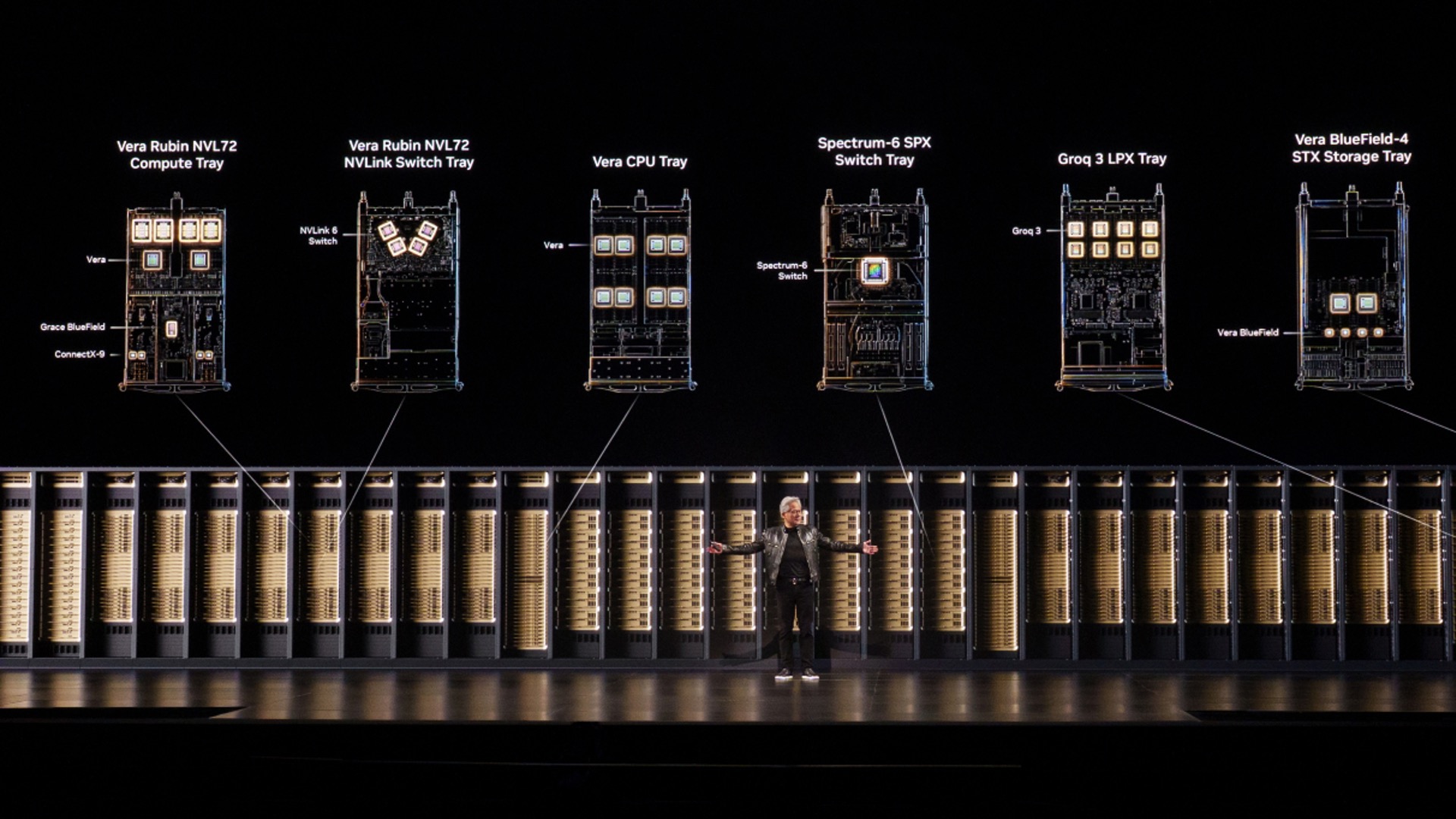
NVIDIA's developer deep dive names five co-design levers — NVFP4, Wide-EP, Dynamo, Vera CPU, and CMX — that push Vera Rubin to up to 30× GB300 throughput per megawatt on the same 288 GB HBM.

NVIDIA's cloud gaming arm is shipping DLSS 5 neural rendering into Hogwarts Legacy today, which is less a game patch and more a live demo of why streaming GPUs keep mattering.

Box is wiring Nvidia’s open Nemotron embeddings into enterprise search so agents get relevant chunks instead of reading every document — faster, cheaper, and harder to clone without Box’s permission layer.

Nvidia is running its own DGX SuperPOD ops with a chat of specialized agents that correlate compute, network, hardware, and scheduling failures — on-prem, with Nemotron, and read-only until SREs trust it.

CUDA 13.5 takes Vera Rubin from early access to production GA and piles on MPS scheduling, multi-GPU Tile communication, Python ergonomics, and Nsight tools — the software floor for the next Nvidia hardware generation.

NVIDIA is pitching a disciplined loop for fixing agents: read the traces, write a test for the failure, change the harness, and prove it on tasks the fixer never saw.
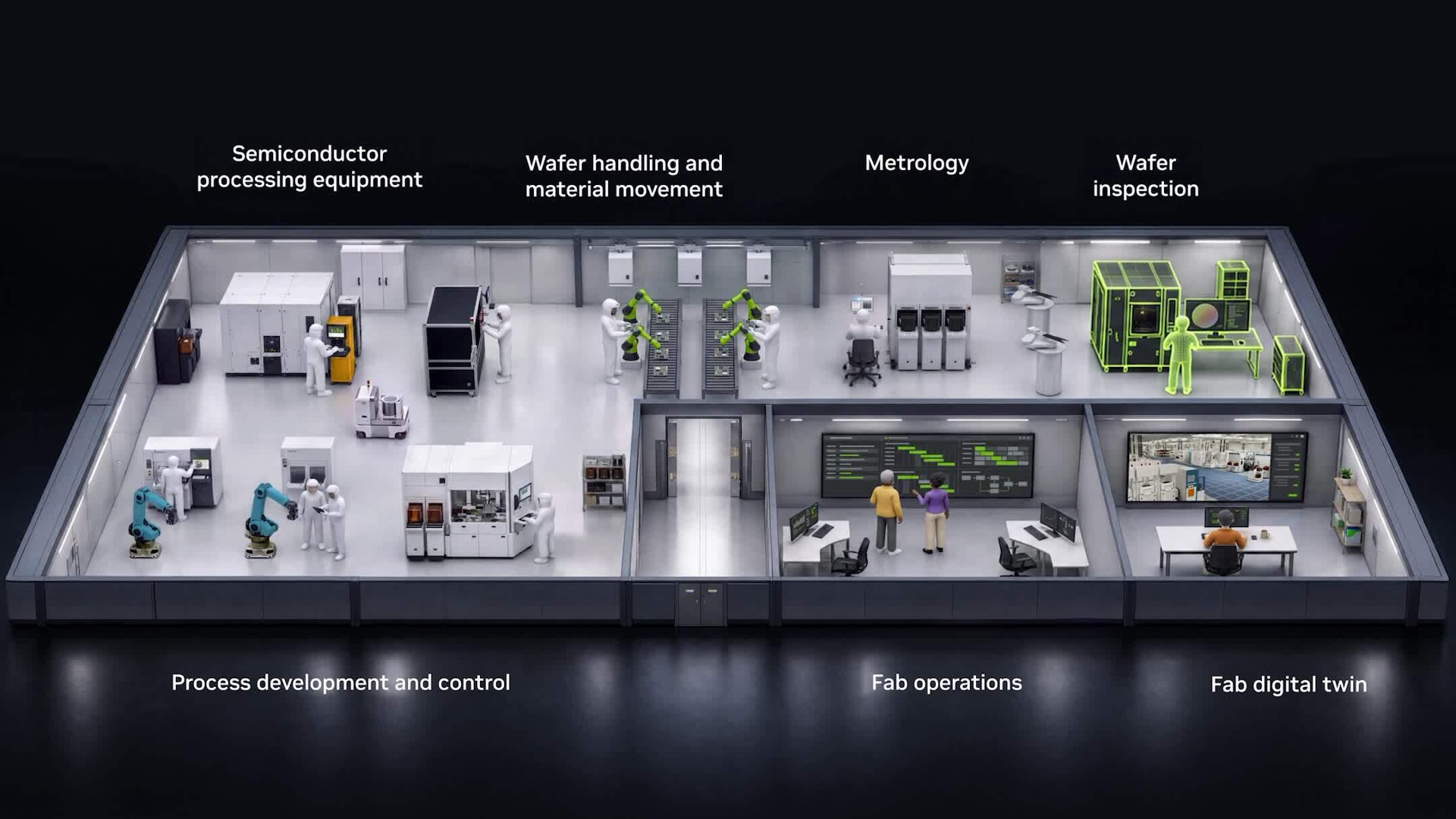
NVIDIA's pitch for the AI-defined fab is mostly partner speedups, and the useful parts are real, but this is a vendor describing a market it sells into.

NVIDIA is pitching cities a shared AI stack for services, planning and surveillance cameras. The service gains are worth having, but turning camera networks into AI agents needs public rules first.

NVIDIA open-sourced the tool it uses to figure out why giant training jobs die, and its best feature is admitting when the evidence isn't enough to say.

NVIDIA wants the 3 a.m. restart of a failed training job to stop being a human's job, and it ships with a sensible default: watch first, act later.

NVIDIA wants Vera Rubin racks running Kubernetes from the first day, and its tested recipe approach is the right fix for a messy bring-up, even though inference is not ready yet.