AI · Oct 28, 2026
Thin, Light and Built for Everything: NVIDIA RTX Spark Windows Laptops Gain New Models, Agent Tools and GamesNvidia’s governance gap: no succession plan, no chair, and a CEO Bernstein says “is Nvidia”
· Updated · Signal Desk newsroom
Analysis of reporting by Ars Technica. How we work
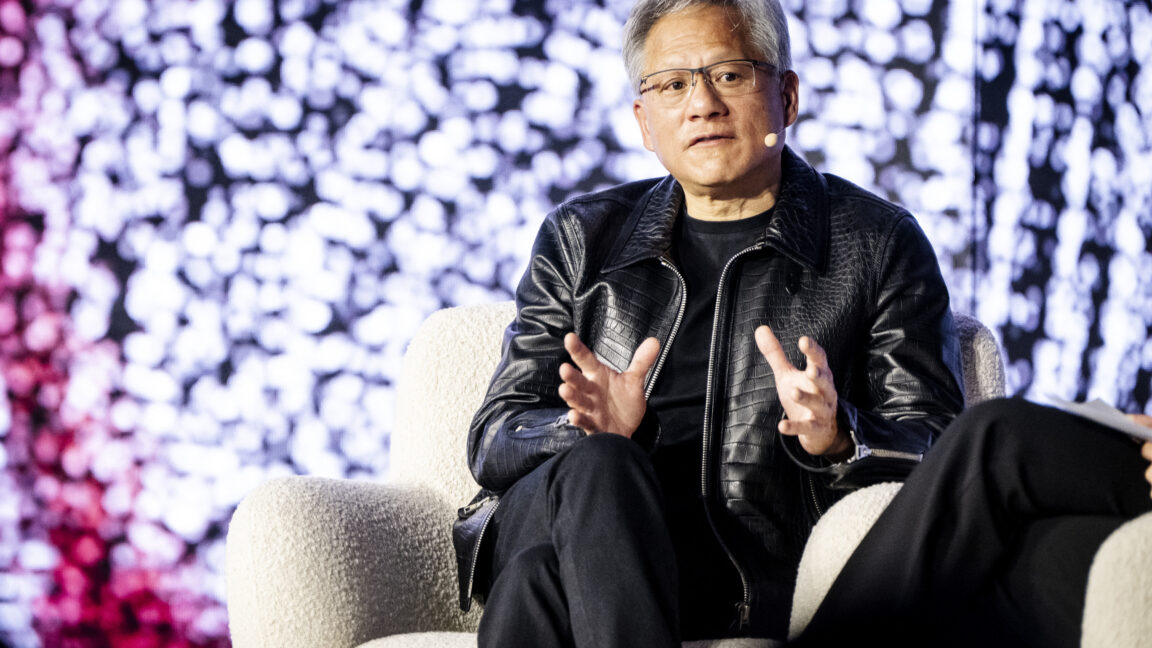
As Nvidia’s board opened an independent probe into its CEO’s admitted affair with an alleged Chinese spy, Ars found filings with no succession plan and a board without a designated chair. The investigation was the board’s first real test of independence.
Key takeaways
- A special committee of sitting directors with outside counsel, likely led by Stephen C. Neal, runs the investigation.
- The board says it has no reason to believe national security or company secrets were compromised; that is a statement, not a finding.
- Nvidia’s filings make no specific reference to succession planning or an emergency CEO replacement process.
- Nvidia was the only S&P 100 company with no designated chair, and several directors have served since the 1990s.
- Huang owns about 3.6%, worth more than $150 billion, without special voting shares.
The probe
Nvidia’s board opened what it calls an independent investigation after its CEO admitted an extramarital affair, reportedly with an executive at a large Nvidia customer whom U.S. officials allege was a Chinese spy (investigation). A special committee of sitting directors, with outside counsel, runs it, likely led by director Stephen C. Neal, the former Cooley chief executive. Shares were down more than 5% by midday Monday, and lawmakers wanted him before congressional committees (Congress).
The board says it has no reason to believe national security or company secrets were compromised. That is a statement, not a finding, and the investigation exists to test it. As one large shareholder told the FT, a compromise of information would be a very different story from an affair.
“He is Nvidia”
Nvidia’s chips sit beneath most of the AI boom, and its CEO personally stood behind investments and guarantees worth hundreds of billions across startups and data center builders. When Bernstein analysts write that he is Nvidia, they mean the risk is concentrated in one person. Biographers describe him running much of marketing, sales and product himself; one calls him the company’s single point of failure. Longtime lieutenant Jay Puri stepped down in August, replaced on the executive team by Microsoft veteran Nick Parker.
No plan, no chair
Nvidia’s filings make no specific reference to succession planning and describe no emergency process for replacing the CEO, beyond a belief in leadership development and a bench of more than 60 direct reports. That isn’t a plan, and for a company this important it is a glaring omission boards should fix before a crisis.
Nvidia was also the only S&P 100 company with no designated chair, and several directors have served since the 1990s. Long tenure can mean deep knowledge, or a board that has never had to say no to a founder. Huang co-founded Nvidia more than 30 years ago and owns about 3.6%, worth more than $150 billion, but lacks the special voting shares that let founders at Meta and Google control their boards, so the board had real power (governance experts).
Not too big to fire
The too-big-to-fire argument doesn’t hold. A code of conduct that bends for the most powerful person in the building isn’t a code. If facts show judgment that put sensitive relationships at risk, the board has to act, whatever the market thinks. Protecting the AI industry means protecting its institutions, not just its heroes.
The board did act within days: after a second reported affair with a direct report surfaced (coverage), it accepted his resignation, named CFO Colette Kress interim CEO (profile) and appointed its first chair. Nvidia had already ceded the top market-value spot to Apple amid a wider AI stock selloff, and rivals building their own chips have a fresh talking point. More in our Nvidia coverage and business coverage.
Who feels it
- Investors
- Key-person risk priced openly, with no succession plan to anchor it.
- AI startups and data center builders
- CEO-backed deals carry new uncertainty.
- Policymakers
- A governance question becomes a national security hearing.
- Nvidia employees
- Shock inside a company built around one leader.
What to watch
- Who leads the special committee and when it reports.
- Congressional testimony on information exposure.
- Disclosure of a succession plan.
- Customer or partner changes to Nvidia commitments.
FAQ
Did Nvidia have a CEO succession plan?
Ars reports Nvidia’s filings made no specific reference to succession planning or an emergency replacement process.
Who is leading Nvidia’s investigation into Jensen Huang?
A special committee of directors with outside counsel, likely led by former Cooley CEO Stephen C. Neal.
How much of Nvidia does Jensen Huang own?
About 3.6%, worth more than $150 billion, without special voting shares.
Companies: NVIDIA
More on NVIDIA
AI · Nov 5, 2026
NVIDIA’s four open Cosmos 3 Nano models let robot and driving teams simulate worlds that reactAI · Nov 9, 2026
NVIDIA Announces New Planned Investments in Korean Startups at the MSIT-NVIDIA AI Startup Partnership ForumAI · Nov 8, 2026
NVIDIA Dynamo Recipes Bring Korea’s Leading Open Models to ProductionAI · Nov 5, 2026
The Wizard of Open Weights: Chris Alexiuk Makes AI Easy With Open Models