AI · Nov 9, 2026
Control Room: A central system to track and stop model workloads across our research infrastructureHow AI Is Helping Care Teams Get Patients the Right Care, Sooner
Analysis of reporting by NVIDIA Blog. How we work
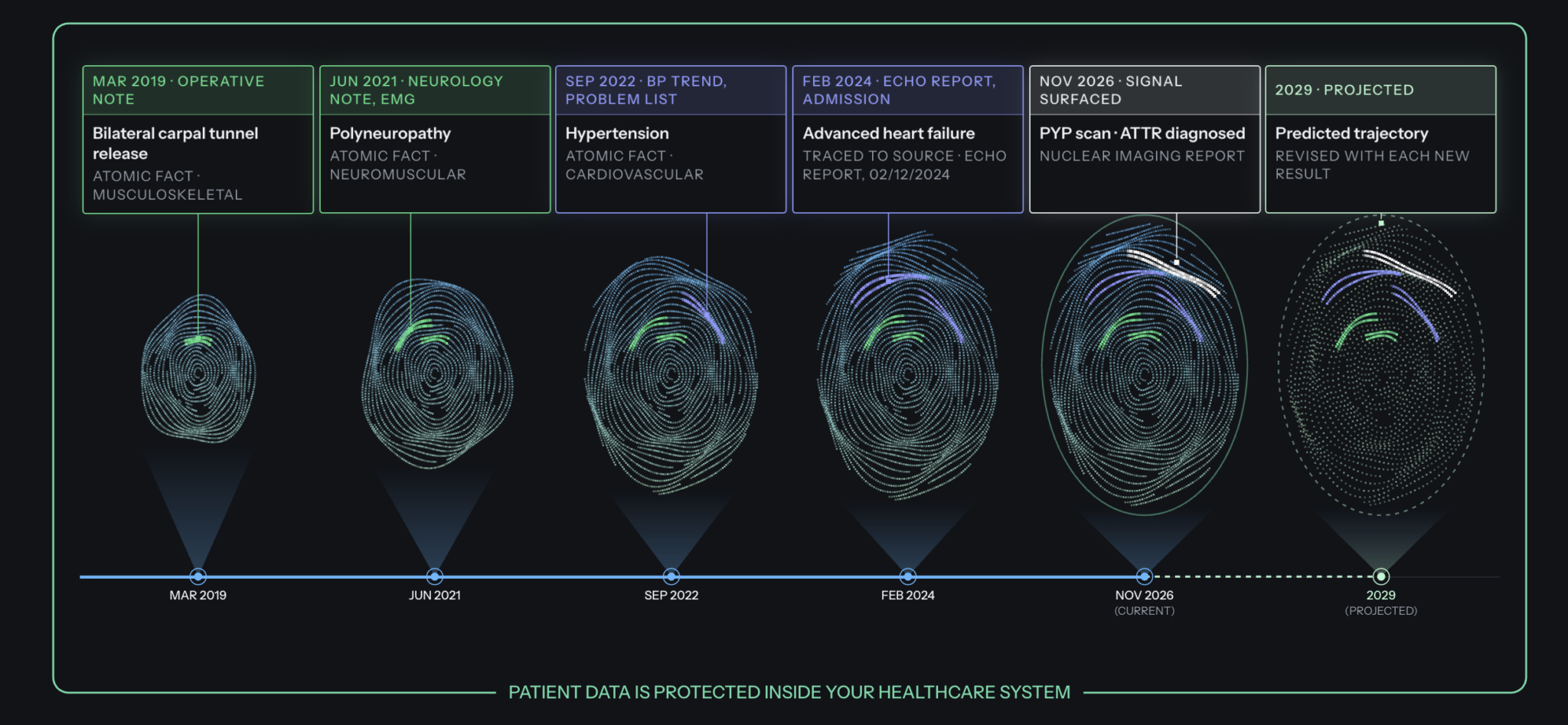
The most promising healthcare AI here isn't a chatbot but a chart reader that stays inside the hospital, leaves the decisions to clinicians and turns years of review into usable evidence.
Why it matters
Nvidia's healthcare roundup leads with Dyania Health, a New Jersey company whose Synapsis AI reads across a patient's whole record, from physician notes to imaging and pathology reads, and flags which patients need attention and why. Each signal points back to its source in the chart, and clinicians make every call.
The headline example is real research. Cleveland Clinic used the system to support a study of more than 7,800 aortic valve replacement patients treated between 2005 and 2021, building a model of valve deterioration and reintervention risk at three, five and ten years. Chart review that would have taken clinicians years was done across the full cohort.
From the desk
We are inclined to root for this kind of AI, and the design choices are why. The tool runs inside the health system's own firewall on its own GPU servers, so patient records are not shipped to an outside cloud. Every output is traceable to a line in the record. And the company is explicit that it is assistive: it surfaces evidence a clinician still has to confirm and act on. That is the right shape for medicine, where an unexplained answer is worse than no answer.
The Cleveland Clinic study points to the real payoff. Most of what hospitals know about long-term outcomes is buried in free text that no one has time to read at scale. If AI can make that history searchable and structured, research questions that were too expensive to ask become answerable. Predicting how long an implanted heart valve will last is exactly the kind of question that matters to patients and to the surgeons planning their care.
Still, we want to be careful about what this piece is. It comes from Nvidia's own blog, and it is a showcase for customers using Nvidia hardware and software, including NeMo for model building and TensorRT-LLM for inference. The post does not report accuracy figures, error rates or how often clinicians overruled the system. A quote from a Cleveland Clinic physician calls the approach a promising step, which is appropriately measured language. We would want peer-reviewed results before treating it as more than that.
The risks if this scales are familiar but serious. A system that tells care teams which patients need attention also, by omission, tells them which ones don't. Patients whose records are thin, inconsistent or written in unusual ways could be under-flagged. Clinician review is a safeguard, but busy teams tend to trust a ranked list. Hospitals adopting these tools should audit who gets missed, not just who gets found.
The company says the same approach can extend to clinical trial matching, closing care gaps in cardiology and oncology, and filling clinical registries. Those are sensible targets. Trial matching in particular could help patients who never hear about studies they qualify for. We will be watching for evidence that the gains show up in outcomes, not just in hours saved.
Context
The post is part of a broader Nvidia roundup on health systems and startups using AI across pediatric research, radiology, hospital operations and home care, with Nvidia supplying the compute. This analysis focuses on the Dyania Health and Cleveland Clinic example detailed in the post.
Who feels it
- Health systems
- On-premises processing offers a path to large-scale chart review without sending records outside the hospital.
- Clinicians
- Less manual chart review could free time for patients, but final responsibility for each decision stays with them.
- Patients
- Better use of long-term records could improve risk predictions and trial access, with a real risk of being overlooked if records are thin.
- Clinical researchers
- Cohort studies that once took years of manual abstraction become feasible on much shorter timelines.
What to watch
- Peer-reviewed publication of the Cleveland Clinic valve study results
- Published accuracy and error data for Synapsis AI's clinical signals
- Adoption for clinical trial matching at additional health systems
- Regulatory guidance on AI tools that prioritize patients for attention
More on AI
AI · Nov 11, 2026
Supporting research on AI and children’s safetyAI · Oct 28, 2026
Thin, Light and Built for Everything: NVIDIA RTX Spark Windows Laptops Gain New Models, Agent Tools and GamesAI · Nov 5, 2026
New NVIDIA Cosmos 3 Open Models for Interactive World SimulationAI · Nov 3, 2026
Daybreak Red is now available in AWS GovCloud (US-East)