AI · Oct 28, 2026
Thin, Light and Built for Everything: NVIDIA RTX Spark Windows Laptops Gain New Models, Agent Tools and GamesPC owners pipe PS5 footage through capture cards to run Nvidia DLSS 5 on GTA VI before the PC port
· Updated · Signal Desk newsroom
Analysis of reporting by Ars Technica. How we work
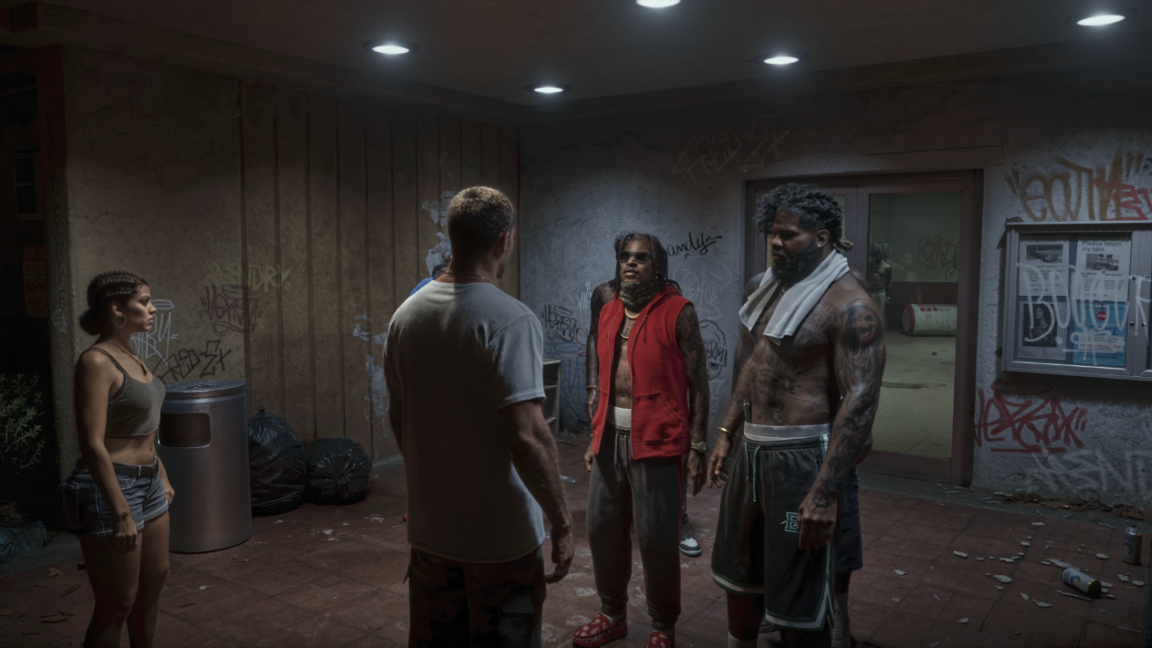
A Reddit write-up routes a PlayStation 5 through a 4K capture card into a PC running open-source Veyra, which applies DLSS 5 and frame generation before sending video to a TV. The trailer demo looks sharper and stranger; live play adds latency nobody has fully measured.
Key takeaways
- GTA VI launches on consoles first; a PC release is reported for early 2027.
- The pipeline: PS5 to 4K capture card to a PC running Veyra, then to a 4K TV.
- Veyra applies DLSS 5 to video and uses frame generation to push 30 fps toward 90 fps.
- The author claims about 11 ms from Veyra but hasn’t tested a live PS5 capture path.
- PS5 Pro owners already have Sony’s Spectral Super Resolution.
The Rube Goldberg pipeline
Grand Theft Auto VI launches on consoles first. That hasn’t stopped Nvidia-equipped PC owners from building pipelines to borrow DLSS 5’s neural rendering anyway. A GTAVI subreddit write-up routes a PlayStation 5 through a 4K capture card into a PC running Veyra, an open-source tool that applies DLSS 5 to video, pushes 30 fps sources toward 90 fps with frame generation, then sends the result to a 4K TV. Capture-card upscaling communities have existed for years; tying them to Nvidia’s newest neural renderer is the twist. DLSS 5 launched with heavy GPU demands and one supported game (DLSS 5 launch), and its early memes were rough, so this is also a vibe check on how far it has come.
What it looks like
A demo on the Extended Look trailer shows what DLSS 5 can do to linear video: crisper backgrounds, softer shadows, more believable scattering, plus washed-out blacks and the soap-opera smoothness frame generation is known for. Nvidia designed DLSS 5 to stay grounded in the engine’s 3D data (3D-guided rendering); applied to a flat video stream, it has less to work with, which helps explain artifacts.
Latency and trade-offs
- Input lag
- Processing adds delay between stick and pixel. The author claims about 11 ms from Veyra without testing a live PS5 path; others call similar setups “noticeable but tolerable,” and some cite implausible 1–2 ms figures.
- PS5 Pro
- Sony’s Spectral Super Resolution already upscales, so stacking DLSS can be redundant.
- Stock PS5
- Owners with spare high-end GPUs may accept the hassle.
- Alternatives
- Wait for the reported early-2027 PC release, or the inevitable unofficial decompilation port, as Ars notes.
Cool hack, not a product
Open tools letting people experiment with neural rendering outside blessed titles is healthy, and it is unofficial proof that Nvidia’s tech travels beyond official integrations, much as cloud gaming now exposes DLSS controls (GeForce NOW). If it becomes normal, expect more latency-blind “improvements,” GPUs burning watts to polish someone else’s console stream, and expectations that every exclusive be AI-post-processed on day one. More in our Nvidia coverage and generative AI coverage.
Who feels it
- Console-first players with PCs
- Sharper, higher-fps output with latency and artifact costs.
- Nvidia
- Proof DLSS travels beyond official games.
- Sony and Rockstar
- Exclusivity windows invite creative bypasses.
- Open-source builders
- Demand for console passthrough pipelines.
What to watch
- Measured input lag on real PS5 capture setups.
- One-click console passthrough tools for DLSS 5.
- How the official PC port’s DLSS compares.
- Platform pushback on redistributed upscaled trailers.
FAQ
Can you use DLSS 5 on PS5 games?
Not officially, but enthusiasts route PS5 output through a capture card into a PC running Veyra to apply DLSS 5 to the video.
Does it add input lag?
Yes. The author claims about 11 ms from Veyra but hasn’t measured a full live PS5 setup.
When is GTA VI coming to PC?
A PC release is reported for early 2027.
Companies: NVIDIA
More on NVIDIA
AI · Nov 5, 2026
NVIDIA’s four open Cosmos 3 Nano models let robot and driving teams simulate worlds that reactAI · Nov 9, 2026
Nvidia’s Korean startup bets span interconnect, open models, robot hands and document AIAI · Nov 8, 2026
Nvidia’s Dynamo recipes speed four Korean open models to production, tuned for B200sAI · Nov 5, 2026
Nvidia profiles Chris Alexiuk, the YouTube teacher making the case that open AI means weights, data and recipes