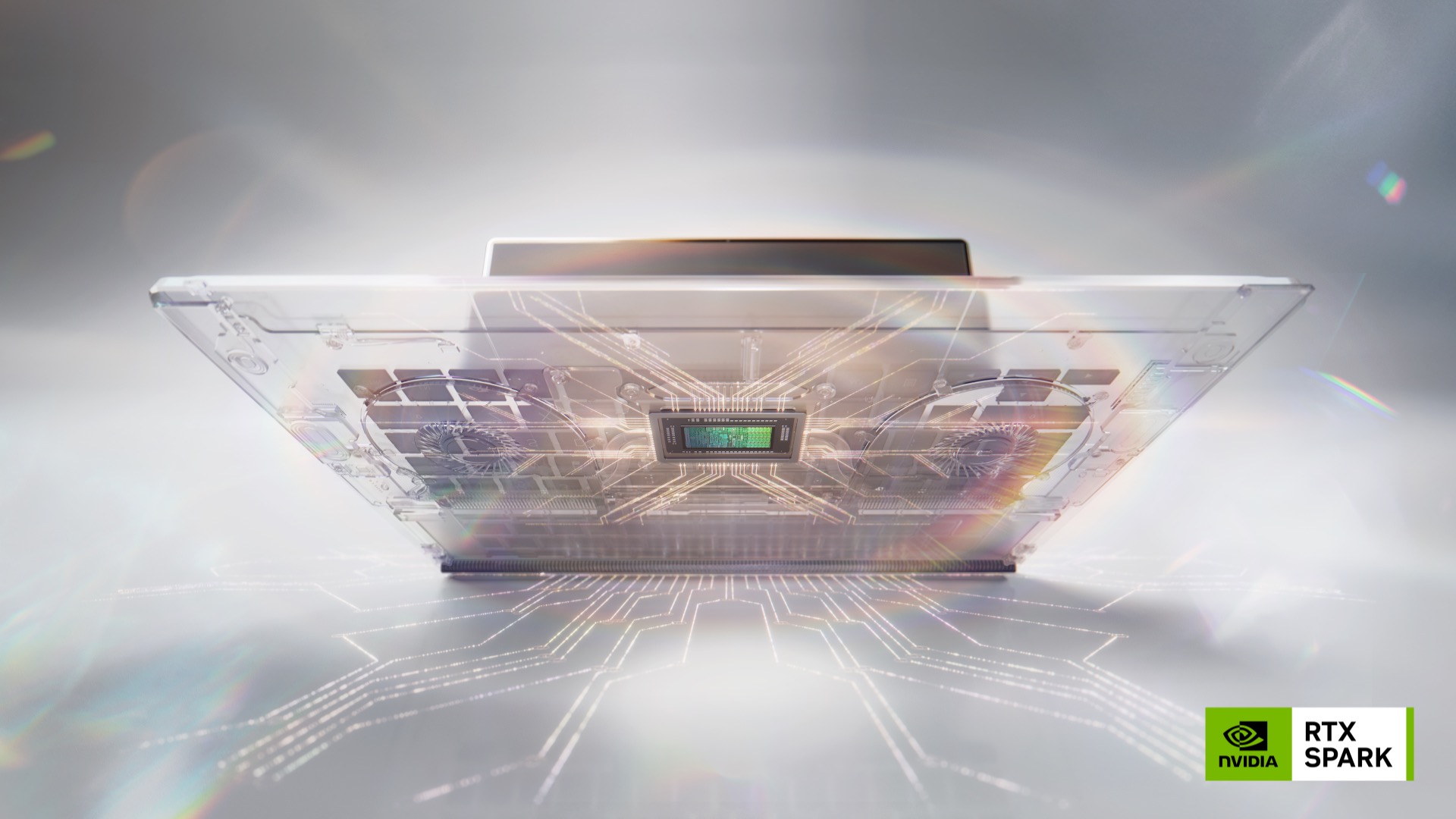
Leading Publishers Bring Blockbuster PC Games and Technology to NVIDIA RTX Spark
RTX Spark's launch lineup is less about individual games than proving NVIDIA's new PC category can satisfy compatibility, anti-cheat, and performance expectations.
The file
Sourced AI briefs in publish order — newest first. Citeable originals live on the homepage under From Signal Desk.

RTX Spark's launch lineup is less about individual games than proving NVIDIA's new PC category can satisfy compatibility, anti-cheat, and performance expectations.

CUDA Python 1.0 is primarily a governance milestone: stable interfaces and shared primitives can matter more than another layer of Python convenience.

Quantization-aware healing challenges the assumption that smaller 4-bit models must trail their full-precision checkpoints, but its comparison needs careful reading.
Shanghai’s robot carnival shows China selling humanoids as public culture before the machines have proved they are the best industrial form factor.

OpenAI’s infrastructure argument is that owning selected layers—from chips to products—can turn efficiency into pricing power and broader demand.

OpenAI’s Jalapeño results claim that a custom inference chip can reduce the usual tradeoff between interactive latency and throughput per watt.

OpenAI’s latest disruption report shows AI serving as a force multiplier for a fabricated institution, while the operation’s real asset was its authority-building infrastructure.
Gradio is turning model pipelines into inspectable graphs, making debugging, deployment and API exposure part of one application surface.

NVIDIA’s Spectrum-X case is that synchronized AI traffic needs hardware routing and per-plane failure isolation, not merely faster Ethernet links.

NVLink Fusion is less about custom silicon than letting custom silicon inherit a mature rack, network, cooling and software envelope.

NVIDIA is splitting long-context inference between Rubin GPUs for context work and Groq LPX for decode, treating token latency as a rack-level problem.

NVIDIA’s Vera Rubin efficiency story uses agent-shaped workloads, but its largest comparison is still an internal, pending-review result.