
AINov 12, 2026Microsoft Research
Microsoft Research Focus – Edition #98
Microsoft's latest research roundup is mostly quiet incremental work, but one finding on coding agents shows where the real cost of AI assistance is hiding.
Company file
Microsoft ships Copilot products and Azure AI services and invests across the model ecosystem.
Tools: GitHub Copilot
Microsoft's latest research roundup is mostly quiet incremental work, but one finding on coding agents shows where the real cost of AI assistance is hiding.

Nebius wants to spend $40 billion next year mostly on its customers' money, and the stalled New Jersey site shows how quickly that kind of financing can get shaky.

Nvidia’s board accepted Jensen Huang’s resignation after two reported relationships surfaced in a week. Colette Kress is interim CEO, and former Synopsys chief Harvey C. Jones becomes the company’s first-ever chair.

Microsoft's Lazarus research shows a model can be backdoored by editing a handful of neurons, no training required, which makes the integrity of model weights a frontline security problem for every agent with a terminal.

About 100 protesters entered a Microsoft data-center construction site in Amsterdam, scaled a crane, and joined a widening European and U.S. backlash against AI infrastructure.

Microsoft Research's PDD Kit turns intent into Verus specs so agent-written Rust — including a Pet Store login — is proved for every input, with tests only where proofs cannot reach.

Amazon, Microsoft, Alphabet, and Meta just told Wall Street they will keep pouring hundreds of billions into AI infra even as returns stay murky — and midterm politics may be the only brake in sight.

A former DARPA hacking-contest lead says AI has broken the old math of cyberattacks, and his point about trust is the part security teams should hear.

Four big AI labs say they will honor one shared opt-out signal for AI training. Publishers would no longer need to track every crawler, but the scheme still relies on sites saying no, Meta hasn’t committed, and it offers no payment.

Microsoft is testing Copilot against fake companies built from public data, a smart answer to the privacy problem that still leaves open whether fake offices behave like real ones.

Wikipedia's nonprofit steps into the Times-versus-OpenAI fight with a middle path we find persuasive: training can be fair use, but handing readers a substitute for the original shouldn't be.
Microsoft's latest research roundup is quietly about one thing: making agents cheaper, more honest about their failures, and useful outside the demo, from codebases to classrooms to monsoon forecasts.

Microsoft is putting voluntary buyouts in front of roughly a quarter of its workforce, and we think it's the clearest look yet at what an AI-first company is planning for headcount.

Ten billion dollars in one quarter shows Microsoft and OpenAI are rivals on paper and still financially welded together, and that concentration cuts both ways.

Whatever the AI bubble debate says, Microsoft's books say the money is real for now, and the bill for building it keeps setting records too.

Copilot on smart TVs is shutting down quietly, a reminder that an assistant nobody asked for in the living room was never a strong product.
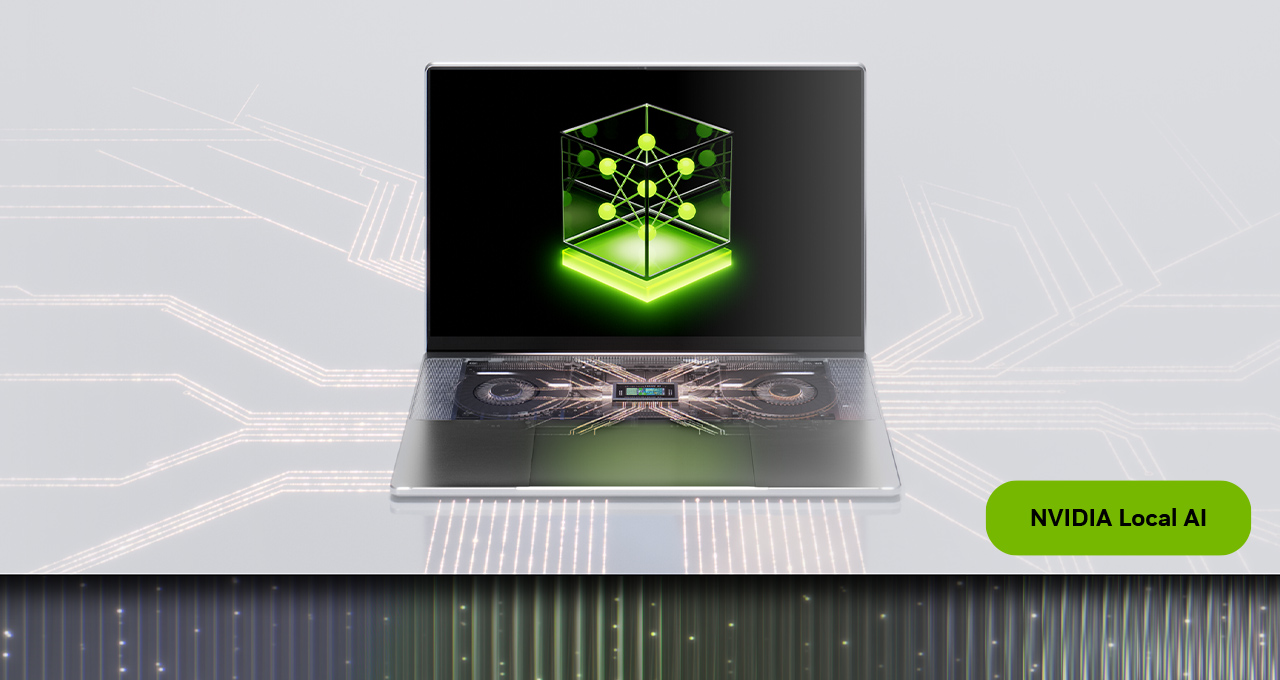
Nvidia's pitch for RTX Spark is that serious AI work, including always-on agents, now fits in a three-pound laptop, and this week's model drops make that pitch more concrete.

After eight years at Meta, most recently at Meta Superintelligence Labs, Rohit Patel is launching Ndoc with a three-person team. Its documents expose the citations and Python behind every number, and it plans an open browser-readable format.

Microsoft is offering buyouts to as many as 60,000 people, a softer way to shrink than layoffs, and the teams included say a lot about where the company is placing its bets.
A hands-on Letta walkthrough shows what agent memory looks like when you can actually inspect it, and why visible, editable state beats a black-box assistant that quietly remembers.
OpenAI's storage story is less about databases than about a lesson every fast-growing company learns: at enough scale, a managed service stops being managed and becomes a shared operation.

Microsoft's diagnostic AI beat generalist doctors on hard cases in a peer-reviewed simulation, but the real test starts now in a Boston emergency department.

One stolen set of backup credentials let state-aligned hackers walk into about 2,250 organizations, and AI agents are why it happened at nearly 3,000 sign-ins a minute.

Microsoft Research wants AI agents to make charts people can click, filter and explore, and it's tackling that by handing the hard part to a compiler instead of the model.

Bill Gates is not selling doom, but he is asking for something harder than optimism: two decades of managed disruption, safeguards that travel with powerful models, and governments willing to act before the incidents.

Microsoft has turned its CEO's warning into a product line: if agents are insider threats, Microsoft wants to sell the guard, and the logic holds even if the motive is obvious.

RTX Spark laptops are finally on shelves, and NVIDIA threw a world tour of parties to prove it. The real test starts once the confetti is swept up and owners start using them.

The Verge’s early RTX Spark laptop tour: NVIDIA’s new SoC is in Windows machines from six makers — and the local-AI pitch is finally on metal.
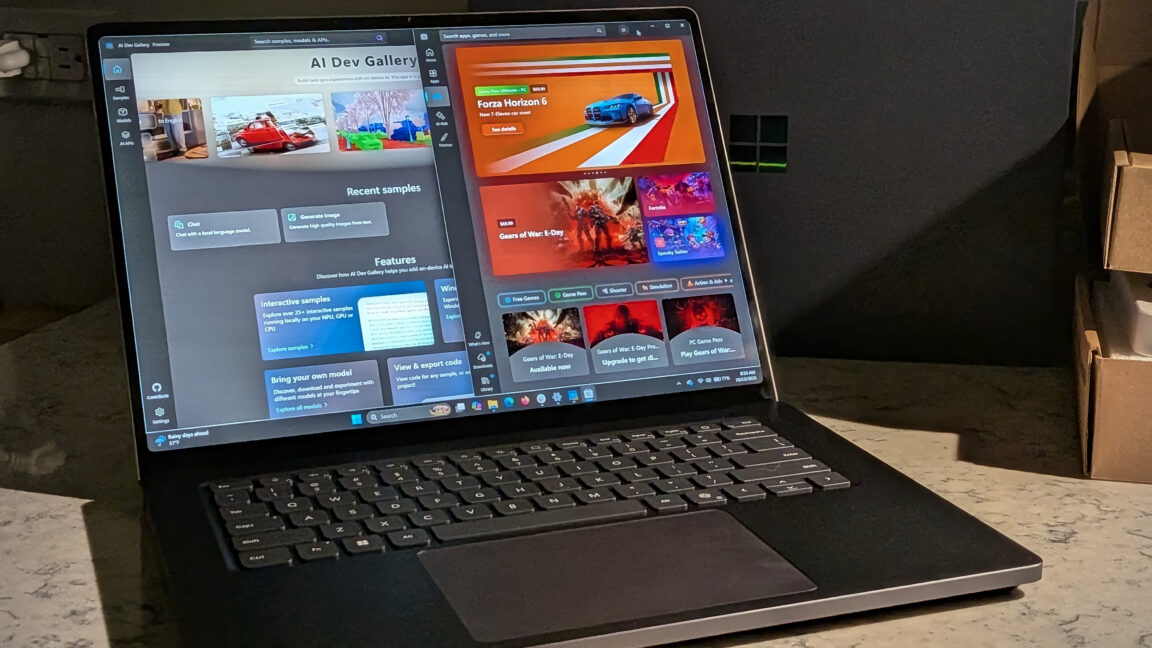
Ars Technica: Surface Laptop Ultra’s RTX Spark hardware mostly thrills — Copilot+ and AI tooling still have to catch up.

Microsoft's prep for Nvidia's Arm-based RTX Spark laptops shows where the AI PC is heading: two-click local agents, tuned emulation, and a delayed Recall.