No, AI agents did not discover a previously unknown Maya site
The Maya site story isn't an argument against AI in science. It's a reminder that spotting something isn't the same as discovering it, and experts usually end up doing the cleanup.
Company file
Google’s AI work spans Gemini, DeepMind research, Search, and Cloud.
Tools: Gemini

The Maya site story isn't an argument against AI in science. It's a reminder that spotting something isn't the same as discovering it, and experts usually end up doing the cleanup.

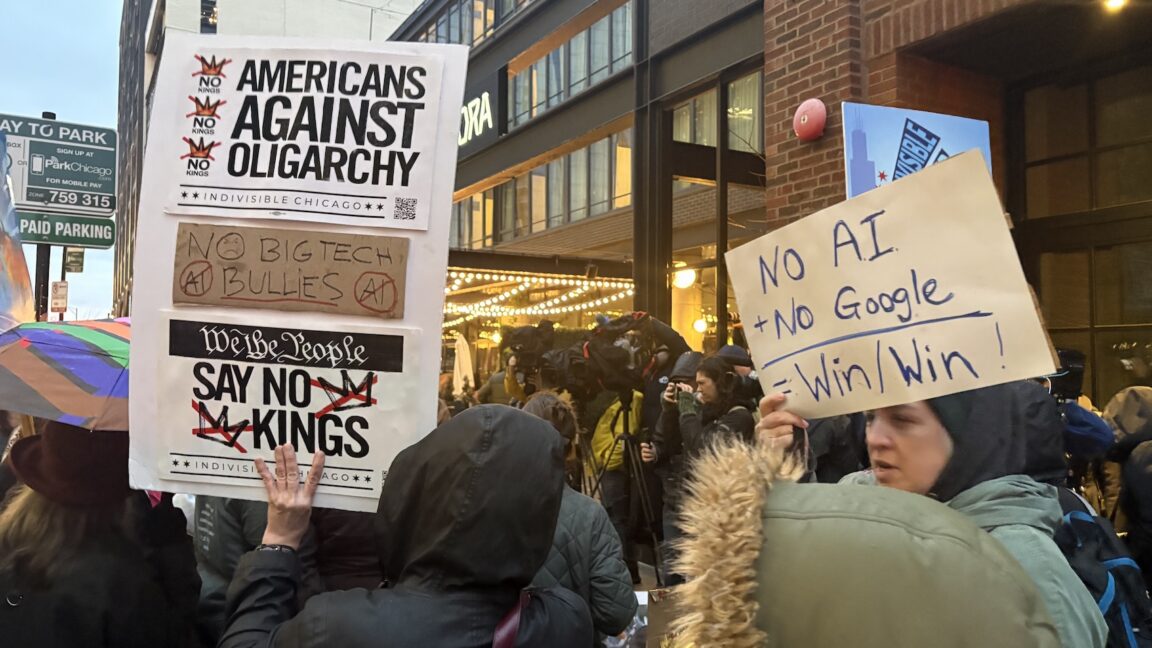
Parents aren't rejecting AI in the abstract; they're rejecting a school default they can't switch off, can't audit, and can't get a straight answer about.

DeepMind workers are using UK labor law to force a vote, and what they want to bargain over is not pay but which militaries their AI serves.

Google's cheaper, faster Gemini 4 tier is the version most people will actually touch, and its safety claims matter more than its benchmarks because of that reach.

Google just put its newest model in front of every Search user at once, and the real test is whether smarter answers still send people out to the open web.

A brand-protection firm asked three chatbots where to buy from 151 brands and found impostor, knockoff and dead-domain sites in their answers. Perplexity did worst, and smaller brands got hit about twice as often.

Google's first Gemini glasses lead with privacy guardrails that go further than Meta's, but the real test is whether an assistant without a screen can be trusted to get things right.

Apple's first smart display arrives years after Amazon and Google defined the category, and its pitch rests on whether a newly capable Siri can make a kitchen screen genuinely useful.
AlphaGenome 2 moves DNA modeling from tissue averages to individual cell types, which is where many disease variants actually do their damage, but access stays hosted and non-commercial for now.

Google built a model that doesn't write answers at all, it just picks them, and that small design choice could make AI agents cheaper, faster and easier to audit.

Google's Tabletop turns group chats into small custom apps built by prompt, a genuinely handy idea for families and friends that also raises fresh questions about who it's for.

AlphaGenome 2 moves DNA prediction from the whole genome down to individual cell types. That's where drug targets actually live, and it's AI for science at its most useful.

A North Carolina family's lawsuit says a chatbot reached their 13-year-old through school search while every safety layer, from the AI to the monitoring software to the alert routing, came late or not at all.

Google's latest Gemini Intelligence drop is less about a smarter model than a deeper reach into the phone itself, and that is both the convenience and the catch.

OpenAI's new business profiles are less a feature than a land claim: if people shop by asking ChatGPT, companies will now have to manage how ChatGPT describes them.

Google's broad release of Gemini 4 Carbon shifts the story from gated cyber capability to economics, and the low introductory price looks designed to win the agent workloads that follow.

Google's two new TPU variants aren't a bigger hammer; they are a confidential-computing chip and a memory-heavy inference chip, aimed squarely at the enterprise workloads Nvidia hasn't fully locked up.

Google and Adobe are wiring their products into each other, a sensible convenience win that also shows how AI assistants are becoming the new storefront for software.

Cyanogen's co-founder learned the hard way not to build on a rival's platform, and his new AI-first desktop OS is a smart, long-shot bet that agents need the whole computer.

Google Cloud’s new healthcare agent, in preview, connects to health records, billing systems and Medicare data to handle records synthesis and prior authorization. It sells to both providers and insurers, so human review of denials is the safeguard that matters.

DeepMind used an agentic system to formally verify key guarantees of the Signal protocol in four weeks, a genuine win for AI-assisted security with big open questions about cost and scale.
Billing plumbing rarely makes news, but letting companies pay Hugging Face through Google Cloud removes a real barrier to adopting open models inside big organizations.
Google DeepMind's new robotics model posts a 96% pick rate on real Mercedes-Benz lines, and the most interesting story is how much a frontier model helped build it.

Apple is now selling $49.99 top-ups for AI features in Logic Pro, an honest admission that cloud AI costs real money and a preview of metered creativity.
Google shipped a process, not a model: coding agents must draft a spec and face zero-context reviewers before they write code — a real fix for slop, if isolation holds.

Google is buying the unfinished Wyoming campus Crusoe couldn’t keep on cost and schedule — and still writing a $17 billion build check while keeping Crusoe on another job in Texas.

Google clarifies its K–12 AI policy: schools can disable Gemini apps and even Search, but they still cannot get classic Search without AI Overviews and AI Mode.

Google's Gemini Omni 1.2 Flash stretches native video to 15 seconds, adds multi-turn edits, tightens reference lock, and cuts price 30% to $0.07 per second at 720p.
Google Research open-sourced a human-in-the-loop way to turn fuzzy ideas like “healthy food” or clickbait into written policies that actually work as vision-model prompts — and beat zero-shot Gemini by about 10 F1 points.

AT&T’s Connected Life security cameras can now ask Gemini what happened at home — natural-language video search and daily summaries — but only if you’re on the $29.99 professional monitoring plan.