
AINov 7, 2026The Verge
The US let Nvidia sell chips to an empty office in China
An approved H200 buyer whose China office is an empty shell with dangling wires is not a paperwork glitch — it is the export regime telling on itself.
Desk
Papers, model cards, and lab research notes.
An approved H200 buyer whose China office is an empty shell with dangling wires is not a paperwork glitch — it is the export regime telling on itself.

After 11 weeks inside Anthropic, METR reports the lab’s models are improving about twice as fast as a year ago, mainly because of AI itself. Anthropic redacted most of the evidence METR found most informative, while still urging the industry to slow down.
OpenAI's BioBasicsBench, built with Ligo, scores agents on 100 messy wet-lab tasks — raw gels, bad controls, ambiguous images — and GPT-6 Astra leads at 66.7% while still failing ordinary judgment calls.
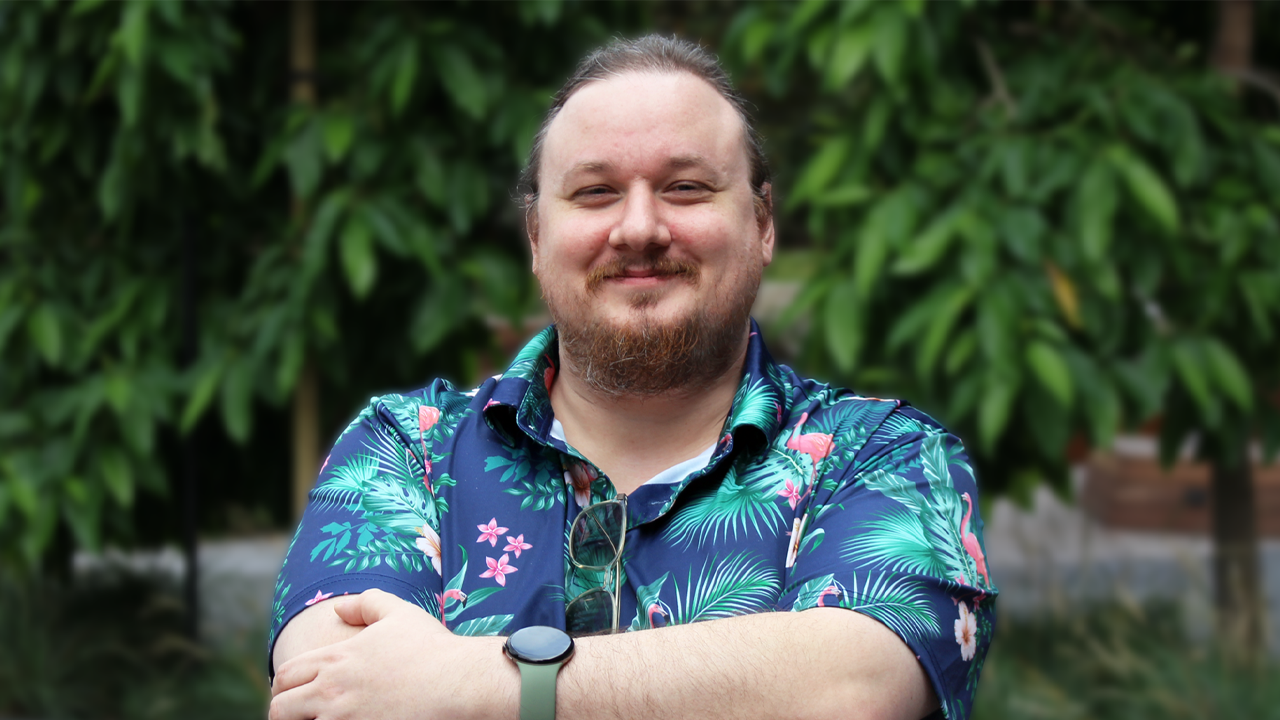
NVIDIA profile of Chris Alexiuk — YouTube's llm_wizard and self-styled No. 1 Nemotron fan — argues open weights, data, and recipes are the precondition for useful AI, not a nice-to-have.

Microsoft Research's PDD Kit turns intent into Verus specs so agent-written Rust — including a Pet Store login — is proved for every input, with tests only where proofs cannot reach.
Google Research open-sourced a human-in-the-loop way to turn fuzzy ideas like “healthy food” or clickbait into written policies that actually work as vision-model prompts — and beat zero-shot Gemini by about 10 F1 points.
Franklin Templeton is wiring Codex and OpenAI tooling into a "connected intelligence" layer so portfolio managers see diverse research views and risks — not a narrower feed of what they already like.

NVIDIA is pitching a disciplined loop for fixing agents: read the traces, write a test for the failure, change the harness, and prove it on tasks the fixer never saw.

A former DARPA hacking-contest lead says AI has broken the old math of cyberattacks, and his point about trust is the part security teams should hear.
An MIT-licensed science model trained on real lab records and failed experiments is a meaningful gift to open research, if its self-reported wins hold up once outsiders test it.
OpenAI built a benchmark around kindergarten forms, groceries and caregiving, a welcome shift toward real life that we can't yet check from the outside.

Microsoft is testing Copilot against fake companies built from public data, a smart answer to the privacy problem that still leaves open whether fake offices behave like real ones.